You Are Allowed to Grieve Someone Who Is Still Breathing
Have you ever sat beside someone you love and felt grief... while they were still in the room with you?
Not the grief that comes after a phone call or a funeral. Something quieter than that. Something that has no name, no ritual, no casserole on the doorstep. A grief you carry alone, in the ordinary moments, every single day.
If that resonates... this post is written for you.
Because in all my years as a Speech and Language Therapist, and in every conversation I've had since, I've come to believe that one of the heaviest griefs a person can carry is one the world doesn't see. A grief without closure. Without permission. Without anyone quite knowing what to say.
And I want to say, before anything else: you are allowed to grieve someone who is still breathing.
THE GRIEF NOBODY NAMES
When we think about grief, we tend to think about death. But there is another kind of grief... one that begins while the person you love is still alive.
Researchers call it ambiguous loss — a term coined by Dr Pauline Boss in the 1970s. It describes the experience of grieving someone who is physically present but psychologically absent. Or psychologically present but physically gone.
For so many women I speak with, it looks like this:
A husband with dementia who no longer recognises the wedding photographs. A wife who came home from hospital after a stroke but hasn't quite come back as herself. A parent who can still sit at the kitchen table but can't remember your name. A child who is physically there but lost to addiction or mental illness.
"I feel guilty for grieving," they say. "They're still here."
And I always want to say: that guilt is not weakness. That is the weight of a grief that has no ritual. No casseroles on the doorstep. No time off work. No social permission to fall apart. Just you, carrying it quietly, every single day.
WHY THIS KIND OF GRIEF IS SO HEAVY
The cognitive load of ambiguous loss is immense. Every day brings new decisions, new losses, new versions of grief layered on top of each other. Anticipatory grief — the grief of knowing what is coming — demands that we mourn future losses before they've even arrived. It is, in one of the most painful phrases I know, grieving in instalments.
And society gives us no structure for it. When someone dies, the world mobilises. The casseroles come. People check in. But with ambiguous loss... nothing happens. Because to the outside world, nothing has happened yet. Your loved one is still alive. And so the grief becomes invisible. And that invisibility is its own wound.
Psychologists call it disenfranchised grief — grief that isn't socially acknowledged or validated. And it is extraordinarily common among carers.
I wonder if that makes sense to you...
WHAT ART JOURNALING CAN DO THAT NOTHING ELSE CAN
Here is what I know to be true, both from research and from lived experience: naming a loss reduces its psychological weight.
Not resolving it. Not fixing it. Just naming it.
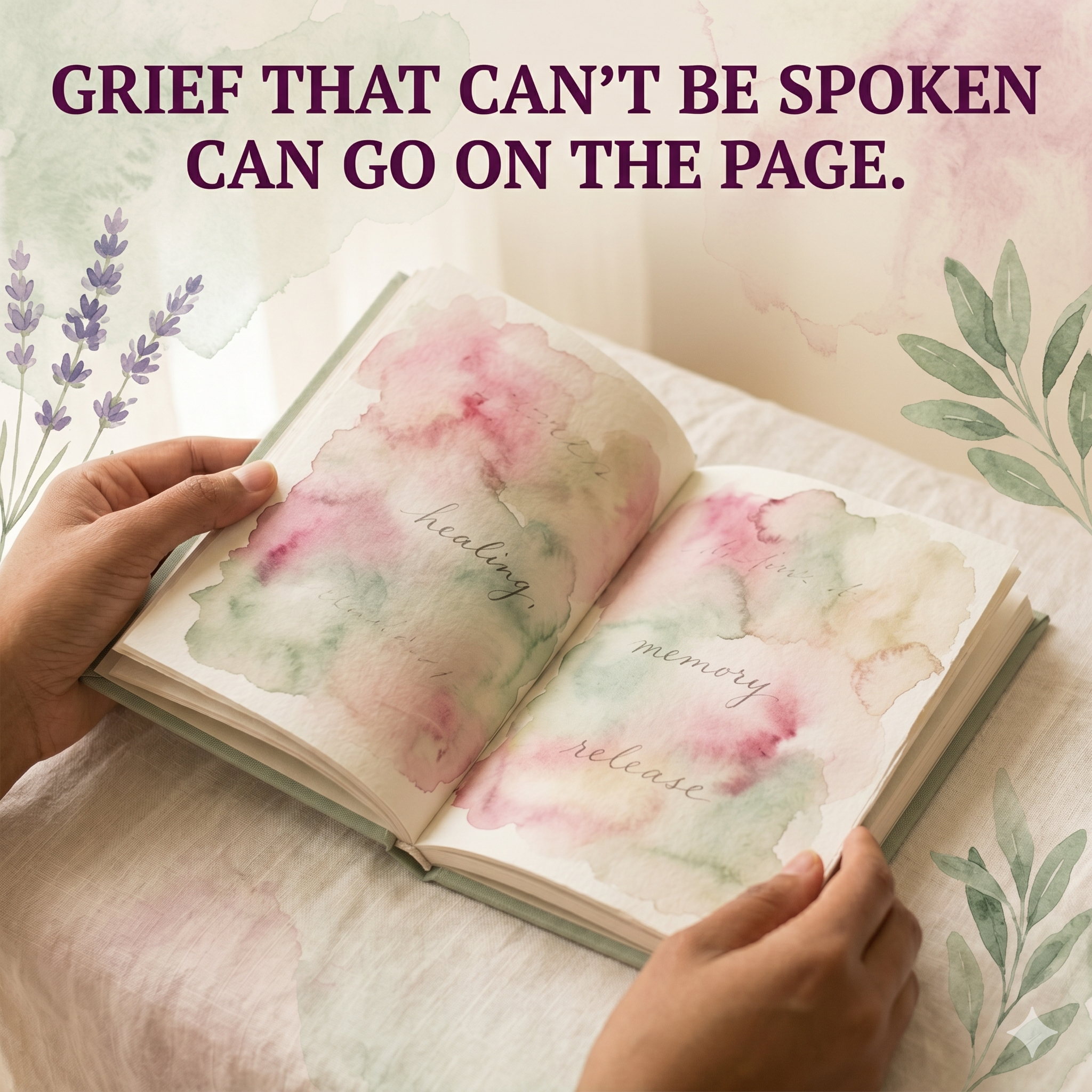
Art journaling is one of the most powerful ways I know to name what cannot be spoken. Because grief that is too complex for words can often find its way onto the page in colour, texture, and mark-making long before it finds its way into language.
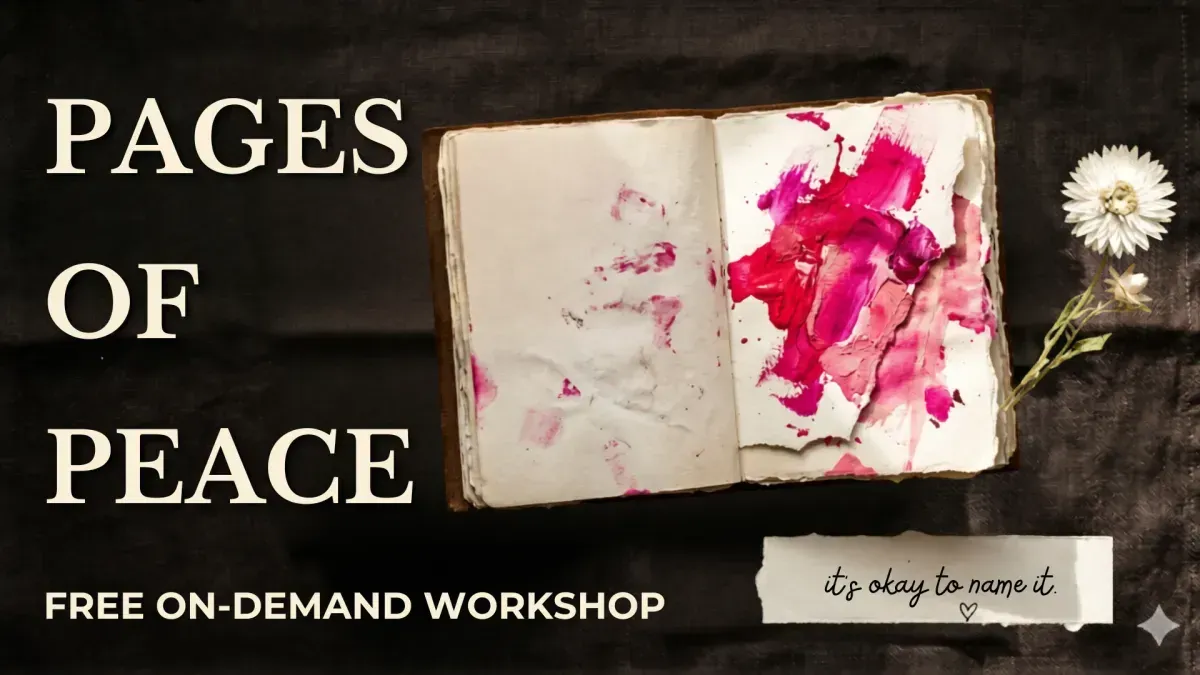
The Grief Pages concept — which I explore in my free workshop — is built on this principle. We are not making something beautiful. We are making something honest. We are giving grief somewhere to go, so that it doesn't have to live entirely in our bodies.
The three things that research consistently shows help with ambiguous loss are: naming the loss, meaning-making, and rituals without closure.
A grief journal is all three at once. Every time you open the pages, you are saying: this is real. I see it. I am not pretending it isn't there.
A GENTLE PLACE TO START

If you've never used an art journal for grief before, here are three prompts to begin with. You don't need any art experience. You don't need special supplies. Just a journal, a pen, and five minutes.
Prompt 1 — Name it. Write the name of the person you are grieving while they are still here. Then complete this sentence: "I miss the version of you who..."
Prompt 2 — What remains. What is still true about them, even now? What flicker of the person you love do you still sometimes see? Write it or paint it in whatever colours come first.
Prompt 3 — A letter. Write three lines to God about this grief. Not a prayer you have to perform. Just honest words. He can hold them.
YOU ARE ALLOWED TO GRIEVE SOMEONE WHO IS STILL BREATHING
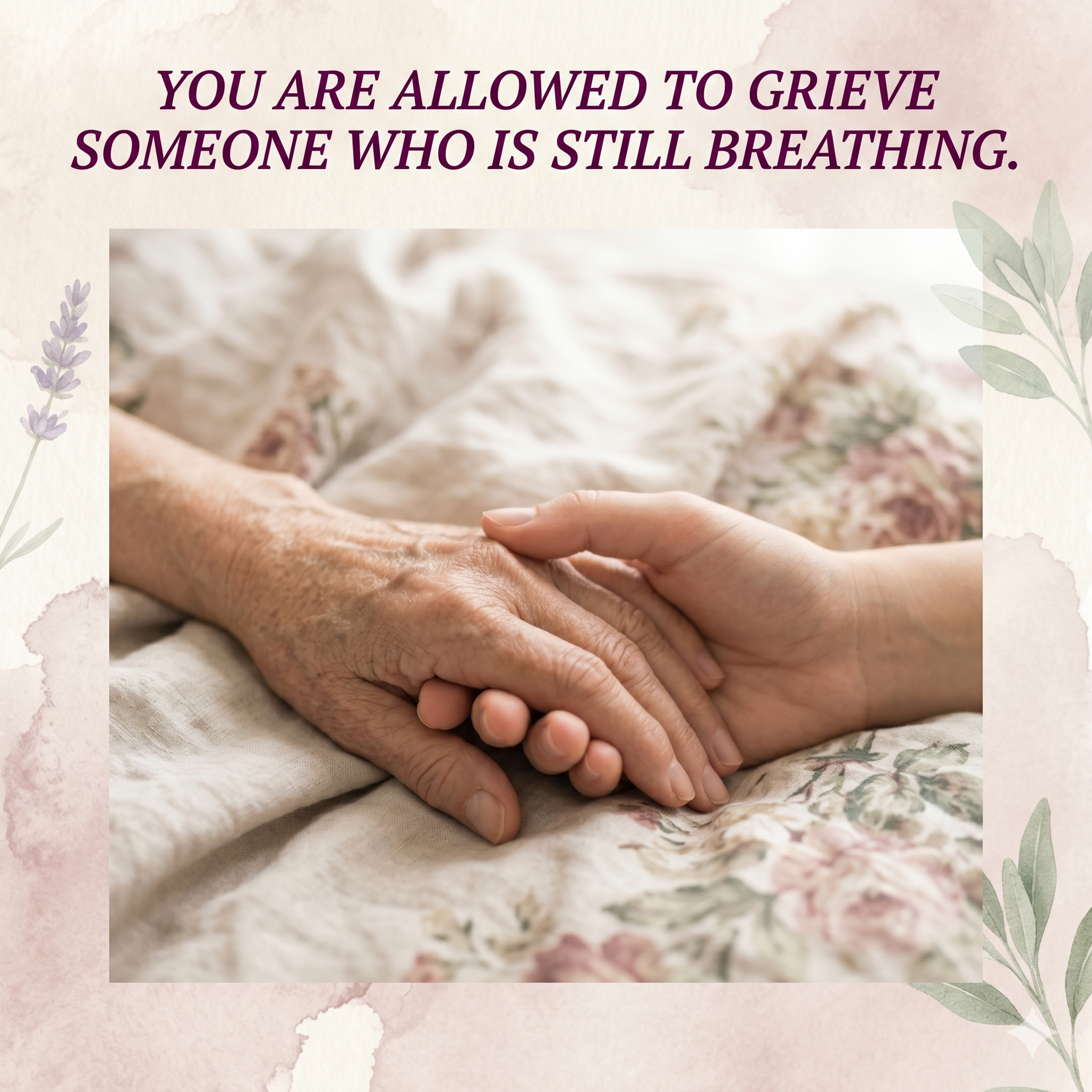
I want to leave you with this — the most important thing I know about ambiguous loss.
You do not need a funeral to have permission to grieve. You do not need others to understand your loss for it to be real. And you do not need to have resolved the grief before you bring it to the page.
"The Lord is close to the broken-hearted." — Psalm 34:18 (Living Translation)
Not after the broken-hearted have found closure. Not when they've figured it out. Close. Now. In the middle of it.
If today has stirred something in you... I would love for you to come and join me at The Grief Pages — my free live art journaling workshop on Friday 29th May at 3pm UK time. People are joining from all around the world. If you show up live, you receive the free companion workbook.
It is a space to create, to breathe, and to give grief somewhere gentle to go.
[Save your free place here → creativesoulspace.com/griefpages]
And if you'd like a gentle daily creative practice to bring you back to yourself... Doodle with God is waiting for you. No skill needed, no special supplies — just you, a pen, and five quiet minutes with God.

P.S. Those who sign up to the workshop and attend live will get the accompanying workbook
A Space to Bring Your Whole Self
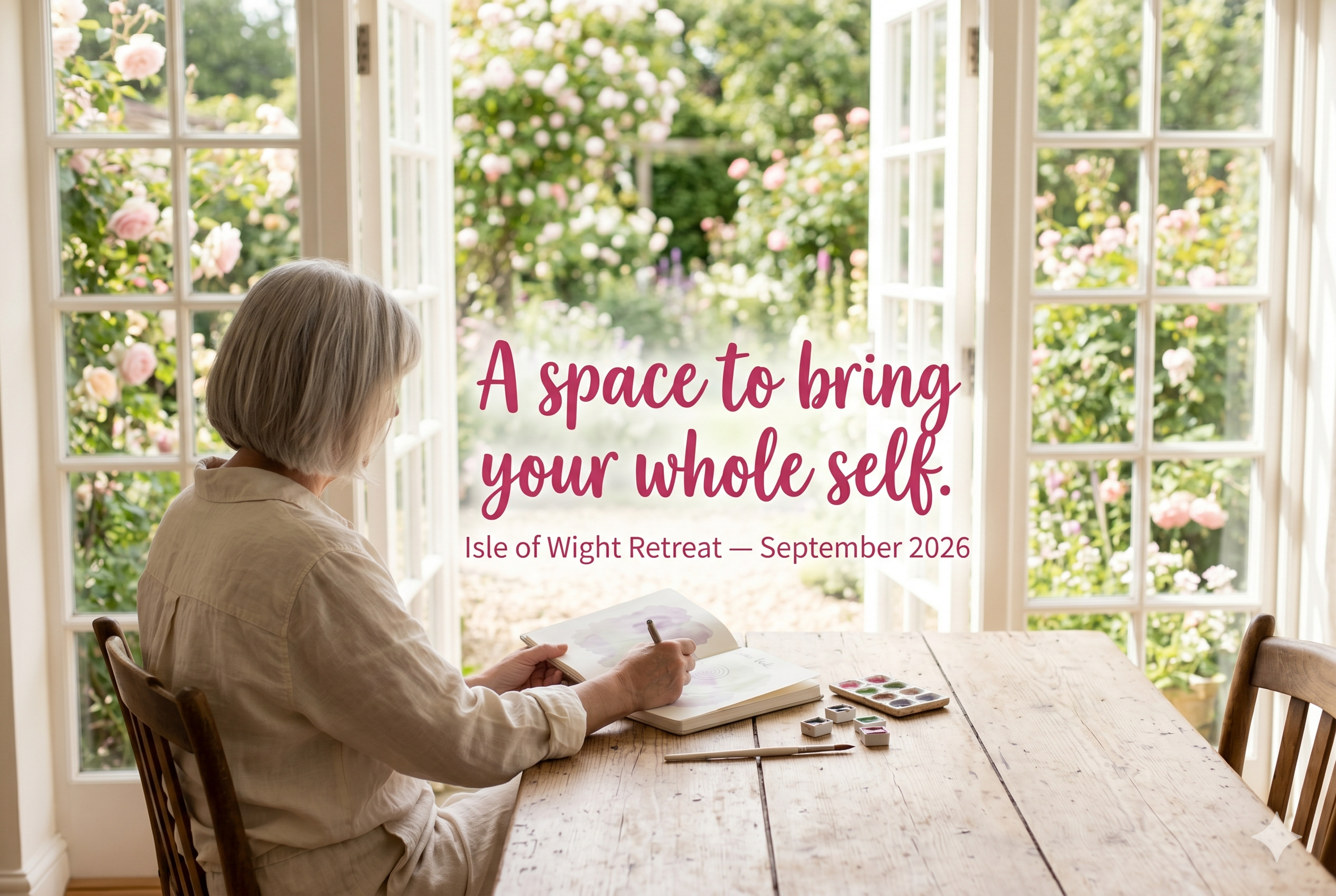
If your soul is quietly telling you that it needs more than another quiet time routine… that it needs space, rest, and a completely different kind of encounter with God…
I want to tell you about something I'm creating for a small group of women this September.
From the 25th to the 28th of September 2026, I'm hosting a luxury creative retreat on the Isle of Wight — three nights at a beautiful farm in Ryde, fully catered, with no agenda except to slow down and hear God again.
We'll spend our days art journaling, sketching, and exploring. We'll visit Osborne House — Queen Victoria's summer home on the island. She was herself a keen artist, and there's something quietly extraordinary about standing in the rooms where she created, as women who are finding their own creative voice.
My partner Adam will lead worship. My son Toby, a fine art photography student, will capture the retreat. Our chef Katrina Collins will feed us extraordinarily well.
It is intentionally small. Intentionally unhurried. Intentionally a space where your prayers don't need to be words.
If your heart lifted a little reading that — pay attention to that lift.
🔗 Find out more about the Isle of Wight Retreat here: creativesoulspace.com/retreat2026
And if you're not quite ready for a retreat but want to begin doodling with God today, start here: creativesoulspace.com/quiet — it's just $7 and it's the gentlest possible first step.
Come and find me at christianartjournaling.com — there's a whole community of women here who are finding their way back to God, one mark at a time.